
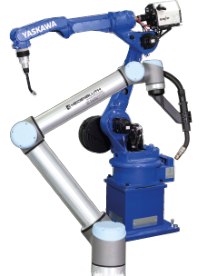
Theoretical principles of resistance welding and process engineering
Resistance welding is a highly developed welding process based on generating heat through electrical resistance. This technology is primarily used in the automotive and metal industries because it offers an efficient and reliable joining method for various materials.
This text provides a comprehensive overview of the theoretical principles and process technology of resistance welding. Furthermore, you will learn how to achieve competent and safe execution of this process.
Resistance welding is based on the principle that an electric current flows through two workpieces under pressure, generating heat at the contact point which melts and joins the materials. The most common methods are:
- roll seam welding
- Spot welding
- Projection welding
Selecting the right electrode:
The electrodes must ensure even heat distribution and be sufficiently durable. Copper alloys are ideal due to their high thermal conductivity. The shape and size of the electrodes influence the pressure and heat distribution during the welding process.
Parameter settings:
The correct parameter settings are crucial for a high-quality weld:
- Welding current
- Welding pressure
- Welding time
- Electrode force
To participate in the training, participants should have a basic understanding of the welding process. The training lasts one day , allowing for a compact yet in-depth exploration of the most important aspects of resistance welding.
This training course is aimed at welders and welding supervisors who already possess basic welding knowledge and wish to expand their skills in resistance welding. Participants should have a basic understanding of welding metal joints, as the course builds upon this foundation.
The aim of the training is to impart to participants the fundamental theoretical knowledge and practical skills in the field of resistance welding. Participants should not only understand the various welding processes, but also acquire the ability to apply these processes safely and competently. This includes both an understanding of the physical principles and the correct handling of the necessary machines and equipment.
Was beinhaltet die Schulung im Widerstandsschweißen?
Die Schulung vermittelt theoretische Grundlagen und praktische Fertigkeiten im Widerstandsschweißen, insbesondere in den Verfahren Rollnahtschweißen, Punktschweißen und Buckelschweißen. Themenschwerpunkte sind die Auswahl geeigneter Elektroden, die Einstellung relevanter Prozessparameter wie Strom, Druck, Zeit und Elektrodenkraft sowie die sichere und kompetente Ausführung dieser Verfahren. Die Schulung umfasst einen hohen Praxisanteil, um die erlernten Inhalte direkt anzuwenden.
Welche Vorkenntnisse benötigen die Teilnehmenden?
Teilnehmer sollten über grundlegende Kenntnisse im Schweißen verfügen. Dies umfasst ein Basisverständnis der Schweißverfahren, Materialkunde und erste praktische Erfahrungen im Schweißen. Diese Vorkenntnisse sind erforderlich, um die Inhalte der Schulung effektiv umzusetzen und die praktischen Übungen erfolgreich durchzuführen.
Save the date
Date: On request.
Start time: 8:00 a.m.
Price
on request
Application Center Address
Ostring 16
34277 Fuldabrück-Bergshausen
Germany
Route
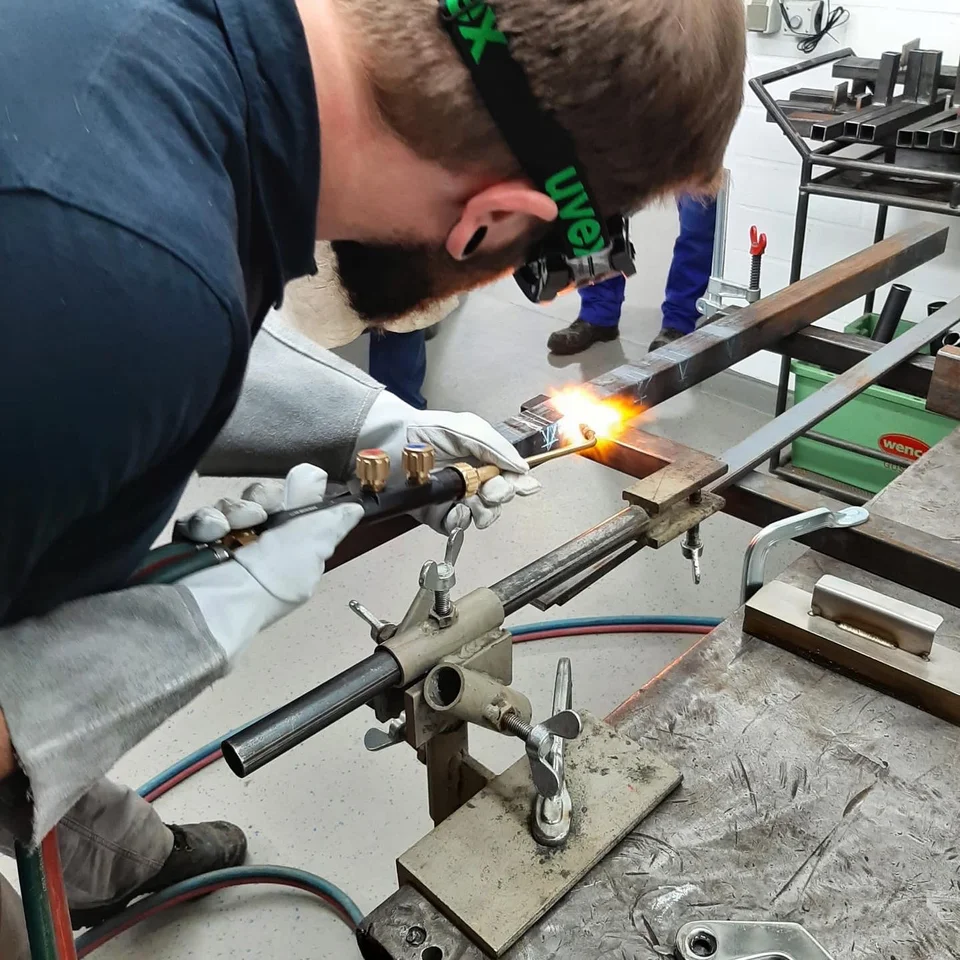
Training details at a glance
Target group:
Welders and welding supervisors
Basic knowledge
of welding fundamentals
Course duration:
1 day
Max. participants:
15
Date
On request
Price
on request